
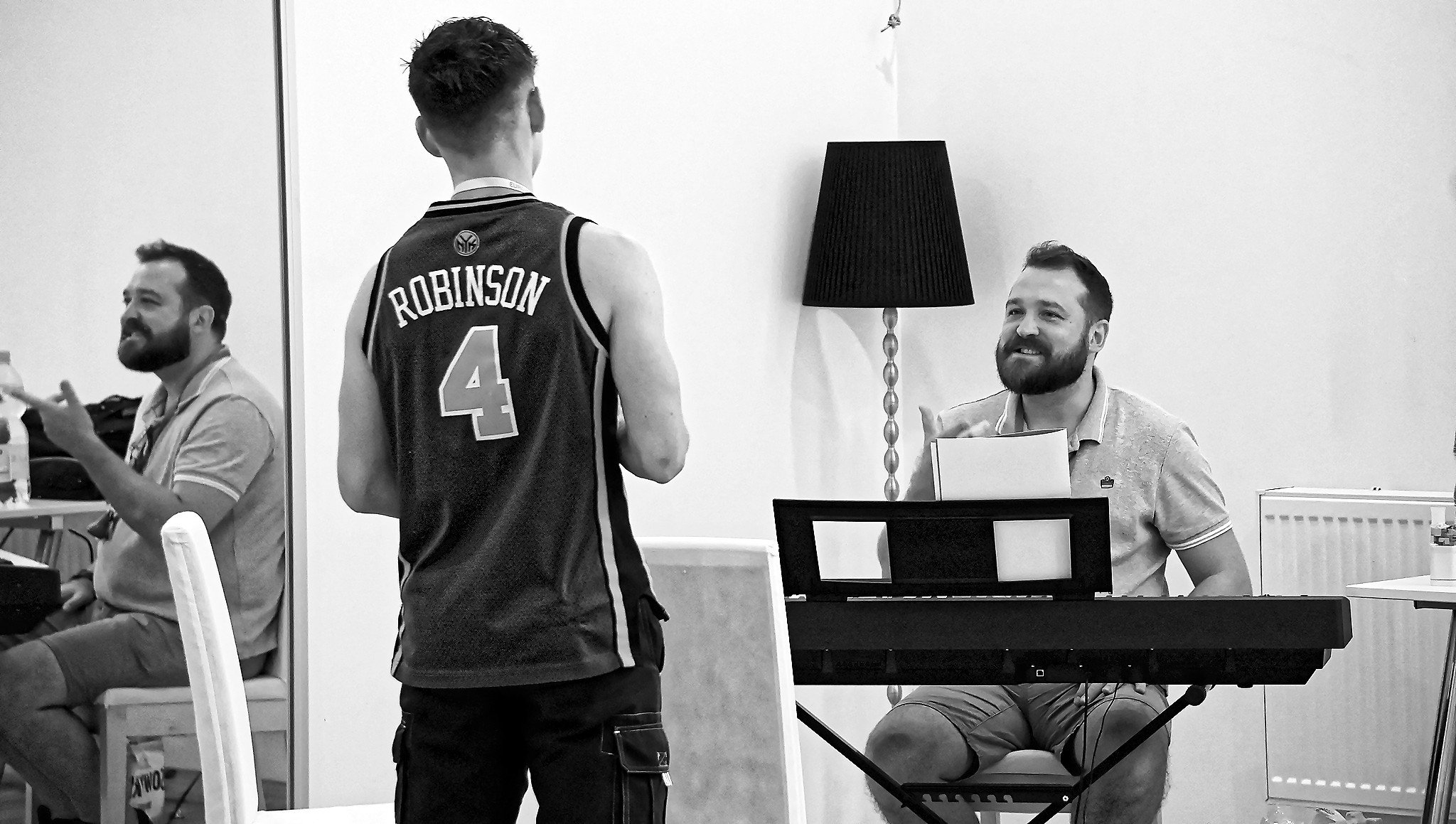
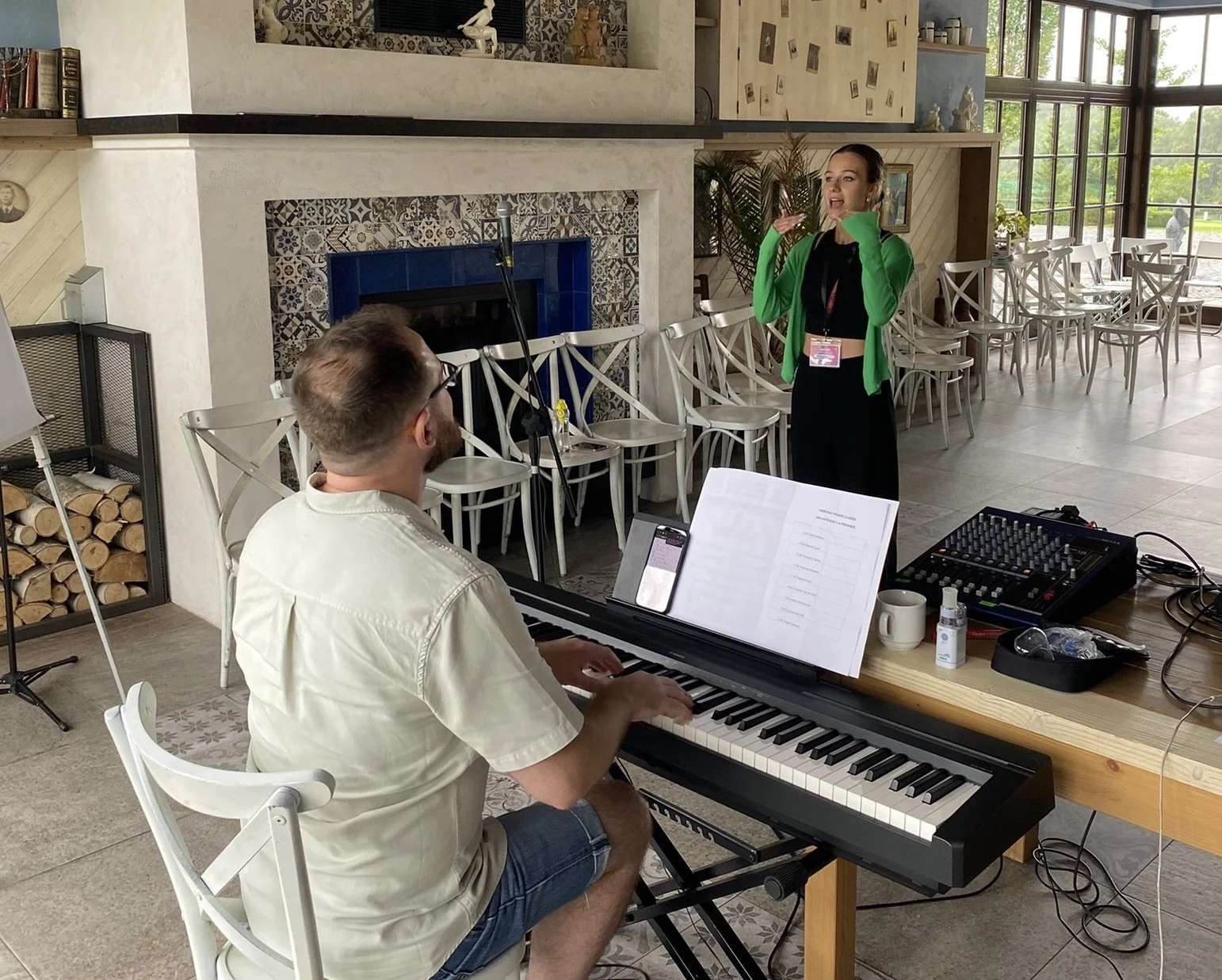
Attending your first lesson can be quite daunting, but rest assured that I am here to help, not to judge, and I endeavour to create a safe space whether you’re a complete beginner or a seasoned professional.
Professional Vocal Coaching
to suit you and your voice!
What does Vocal Coaching Involve?
Voice Assessment – We'll begin with a simple vocal exercise that gives me detailed insight into how your voice is functioning. I'll then ask you to sing a verse and chorus of a song that crosses the transition between chest voice and head voice, allowing me to assess your registration, resonance and vibrato. We'll also discuss your vocal health and, where relevant, your general health to identify any factors that may be affecting your voice.
Tailored Technical Exercises – Based on what I hear and what you tell me about your singing, I'll create exercises specifically designed to address any imbalances, inefficiencies or compensatory habits. We'll record the lesson on your phone so you can practise confidently between sessions.
Repertoire & Performance – We'll apply your developing technique directly to your songs, helping you build a voice that is healthy, free and resonant. Whether your goal is to improve your confidence, prepare for auditions, perform professionally or simply enjoy singing more, every lesson is tailored to help you get there.
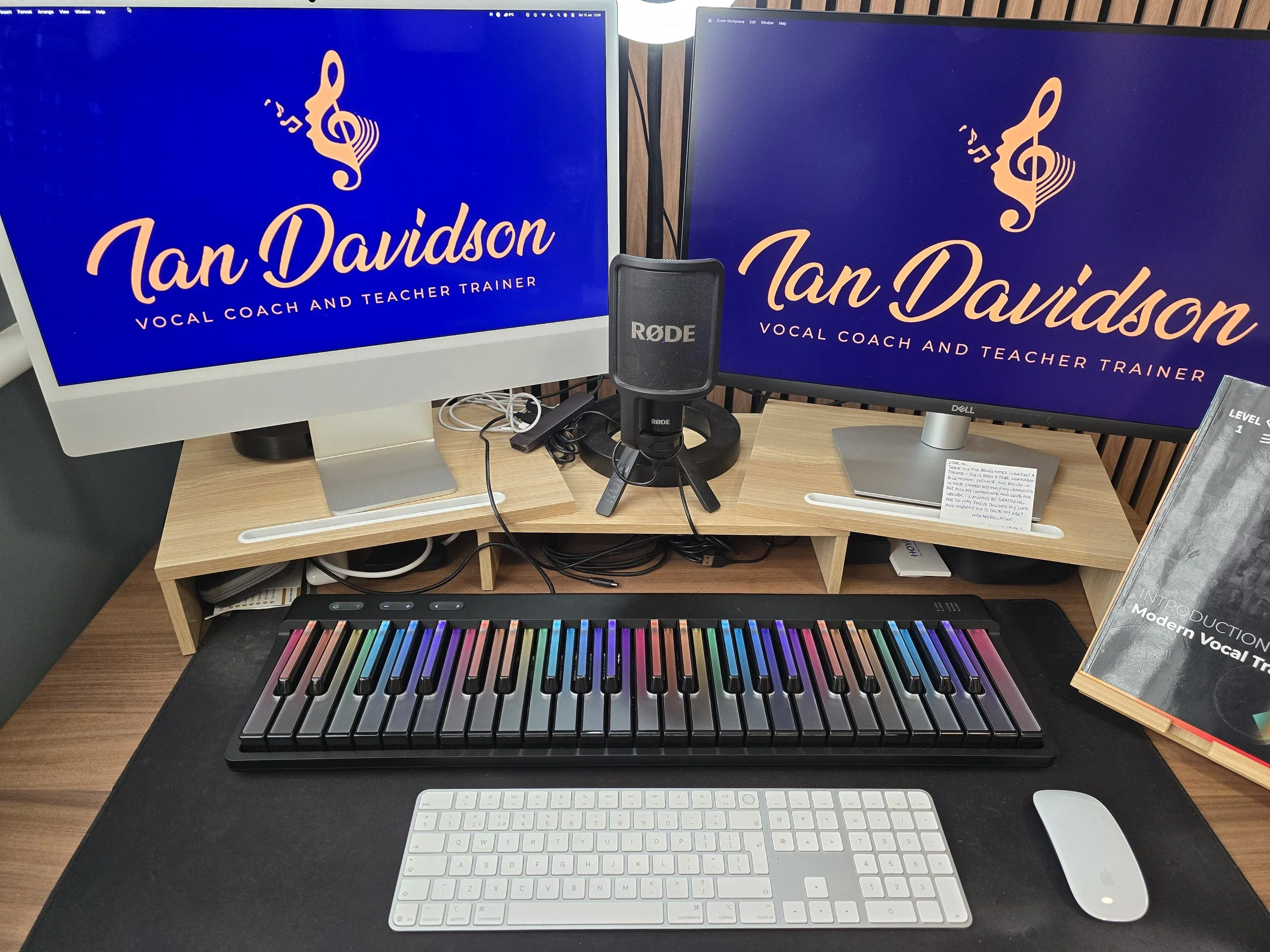
New to Zoom?
Can’t get to see me in person? No problem as I also teach online via the Zoom App.
I've worked with singers from all over the world using Zoom, and it's a remarkably effective platform for voice lessons. You'll receive the same personalised coaching from the comfort of your own home, without the time and expense of travelling or finding parking.
If you'd like to find out more about online lessons, simply get in touch and I'd be happy to answer any questions you may have.
You’re not paying for my voice You’re paying for my ears
Don’t get me wrong, I can sing, and I take real pride in demonstrating sound and technique properly - students need to hear the correct sound before they can learn to reproduce it.
But that isn't solely what you're paying me for. What you're paying for is a professional observer: someone who can hear precisely what your voice is doing before you can feel it yourself - where the tension actually lives, what's compensating for what, which habit is the real cause and which is just the symptom. That skill isn't built from attending a course, or completing a degree even. It's built from years of listening to thousands of different voices until the ear gets faster than the problem.

When I think you’re ready to do without me, I’ll tell you
I don't build my teaching around locking you into a lesson every week for years while you work through the grades. That's a perfectly sound business model, and there are many fantastic teachers out there who will happily take you down that road - it's just not how I think about the job.
I'd sooner identify what the cause of the problem is, work with you on the solution, and when that’s in place, send you off to be a singer - using me as and when you need me, for the occasional "tune-up" or when something specific crops up. How often you come back is always your choice. But I'll be honest with you either way: when I think you're ready to do without me, I'll tell you.

I want to know the whole picture Not just your vocal cords
I also don't treat the voice as a mechanism in isolation. Medicine has a model for this called the biopsychosocial approach - the idea that a health problem is rarely just physical; it's physical, psychological and social factors interacting. I've found it maps onto singing just as well. A register break isn't always a purely technical fault. Sometimes it's tension carried from anxiety about a specific note. Sometimes it's a habit shaped by years of singing in a choir that asked for a different sound than the one you have.
Regardless, I want to know the whole picture, not just what the vocal folds are doing, because that's usually where the answer is hiding.